 Medically ReviewedDr. G. BharatkumarOrthopaedic & Joint replacement Surgeon Medically ReviewedDr. G. Bharatkumar
Dr. G. Bharatkumar, Director and Head of Orthopaedics at MITR Hospital, Kharghar, has 15+ years of experience in robotic-assisted knee and joint replacement.
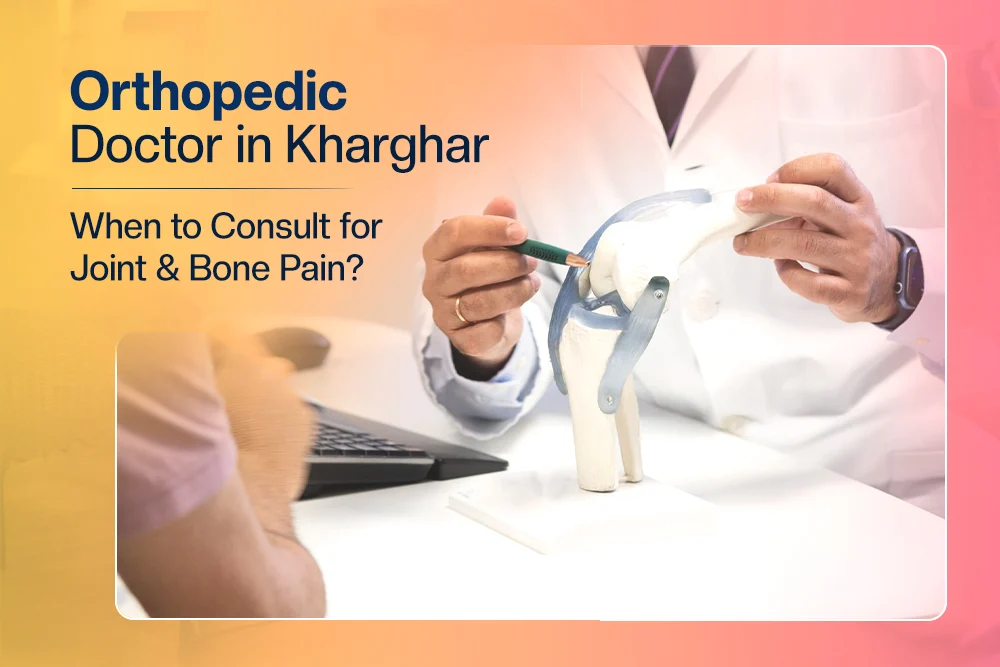
View doctor profile →Joint and bone pain can affect people of any age. Joint and bone pain can affect people of any age, whether caused by an accident, arthritis, sports injuries, aging, or poor posture. If left unchecked, the consequences can be very harmful. Consulting an experienced orthopedic doctor in Kharghar at the right time can help speed recovery and prevent complications.
Orthopedics is concerned with the diagnosis and treatment of diseases related to bones, joints, muscles, ligaments, tendons, and spinal structures. The full scope of orthopedic services ranges from basic treatments to complex surgical procedures.
Topics We Will Cover
- Understanding Orthopedics and Its Importance
- Key Highlights of Orthopedic Care
- Common Conditions Treated by Orthopedic Specialists
- When Should You Consult an Orthopedic Doctor in Kharghar?
- Common Symptoms Not to Ignore
- Diagnostic Procedures in Orthopedics
- Treatment Options: Non-Surgical vs. Surgical
- Choosing One of the Best Orthopedic Doctors in Kharghar
- Faqs
Table of Contents
- Understanding Orthopedics and Its Importance
- Key Highlights of Orthopedic Care
- Common Conditions Treated by Orthopedic Specialists
- When Should You Consult an Orthopedic Doctor in Kharghar?
- Common Symptoms Not to Ignore
- Diagnostic Procedures in Orthopedics
- Treatment Options: Non-Surgical vs. Surgical
- Non-Surgical Treatments:
- Surgical Treatments:
- Why Choose MITR Hospital for Orthopedic Care in Kharghar
- FAQs About Orthopedic Doctor in Kharghar: When to Consult for Joint & Bone Pain
Understanding Orthopedics and Its Importance
Orthopedics is a branch of medicine that focuses on the diagnosis, correction, prevention, and treatment of bone problems and skeletal disorders affecting the bones, joints, muscles, ligaments, and tendons. The musculoskeletal system gives the body its form and enables movement. Therefore, this discipline is important for good physical well-being. The musculoskeletal system consists of:
- Bones
- Joints
- Muscles
- Tendons
- Ligaments
- Spine
An orthopedic specialist helps patients manage pain, improve mobility, and treat injuries and conditions. An orthopedist visit in Kharghar becomes very essential when pain interferes with your everyday activities, walking, climbing stairs, physical activity, and work.
Orthopedic treatment is not restricted to surgical methods alone. Several problems could be addressed through medication, physiotherapy, lifestyle changes, and rehabilitation.
A person usually consults an orthopedist when experiencing the following:
| Orthopedic Issue | Common Cause |
| Knee pain | Arthritis, injury, aging |
| Back pain | Poor posture, slipped disc |
| Shoulder pain | Frozen shoulder, muscle strain |
| Fractures | Falls, accidents |
| Sports injuries | Physical activities |
| Joint stiffness | Arthritis or inflammation |
Key Highlights of Orthopedic Care
- Comprehensive Diagnosis: Using high-tech imaging to determine the precise reason for pain.
- Multidisciplinary Approach: Collaboration among surgeons, physical therapists, and pain specialists.
- Patient-Centric Treatment: Emphasis on recovery of movement using the most non-invasive techniques.
- Preventive Guidance: Education on proper posture, diet, and exercise to ensure healthy bones and joints.
Common Conditions Treated by Orthopedic Specialists

Orthopedic specialists treat a wide range of conditions, from acute injuries to chronic degenerative diseases.
| Category | Common Conditions |
| Joint Disorders | Osteoarthritis, Rheumatoid Arthritis, Bursitis, Gout, and Joint Dislocation. |
| Bone Conditions | Fractures (Stress, Compound, Greenstick), Osteoporosis, and Bone Infections. |
| Soft Tissue Injuries | Ligament tears (ACL/MCL), Meniscus tears, Tendonitis, and Rotator Cuff injuries. |
| Spine Health | Herniated Discs, Sciatica, Scoliosis, and Chronic Lower Back Pain. |
When Should You Consult an Orthopedic Doctor in Kharghar?
If you have any of the following problems, you need to consult an Orthopedic doctor in Kharghar:
- Pain in your joints that causes you difficulty sleeping and doing your usual tasks.
- Significant reduction in your joint flexibility (for example, being unable to extend your arm or leg fully).
- A serious injury or fall.
- Long-term pain lasting over 12 weeks.
- Visible deformities in the joints or limbs.
Common Symptoms Not to Ignore
Early diagnosis and timely treatment will help prevent orthopedic conditions from becoming serious problems. Be wary of these vital symptoms that require immediate medical attention.
- Numbness or Tingling: Usually caused by nerve impingement, herniated discs, spinal problems, or inadequate blood flow to the arms, legs, or feet.
- Joint Swelling and Redness: Symptoms that usually occur due to inflammation, infections, arthritis, or trauma.
- Instability: A feeling that your knee, ankle, or shoulder could suddenly “give out” may indicate damaged ligaments, weak muscles, or unstable joints.
- Morning Stiffness: If your stiffness lasts more than 30 minutes in the morning, this may be due to inflammatory arthritis or another joint disorder.
- Localized Heat: Joint tenderness may indicate an infection, inflammation, or even injury to tissues within the joint. Such conditions should never be overlooked.
Diagnostic Procedures in Orthopedics

A renowned orthopedic hospital in Kharghar uses various diagnostic tools, such as:
- X-rays: Assist in detecting bone fractures, bone misalignment, arthritis, and joint injuries.
- MRI (Magnetic Resonance Imaging): Gives detailed pictures of ligaments, tendons, muscles, cartilages, and other soft tissues.
- CT Scans: Provide comprehensive cross-sectional images in cases of complex bone injuries and diseases.
- Bone Density Scan (DEXA): Frequently used to identify osteoporosis.
- Electromyography (EMG): Tests for nerve and muscle problems such as nerve compression or muscle disease.
Treatment Options: Non-Surgical vs. Surgical
Orthopedic surgery in the modern world is concerned with alleviating pain, improving mobility, and restoring daily function through non-invasive and invasive procedures, depending on the severity of the condition.
Non-Surgical Treatments:
- Physical Therapy: Specific exercises are helpful for strengthening muscles, increasing flexibility, alleviating stiffness, and promoting recovery from injuries or arthritis.
- Medications: Inflammation and swelling are reduced with NSAIDs, corticosteroids, pain medication, and muscle relaxants prescribed by medical practitioners.
- Injections: Hyaluronic acid and PRP (Platelet-Rich Plasma) injections may help lubricate joints, promote tissue healing, and relieve pain for a prolonged period without the need for surgery.
- Bracing and Orthotics: External splints, supports, and orthotics are devices that can help immobilize weakened bones and joints, strengthen them, and promote good posture.
Surgical Treatments:
- Arthroscopy: A surgical procedure that uses a tiny camera to inspect joint damage with minimal incisions and a quick healing time.
- Joint Replacement: Joints are replaced with artificial parts to help them function properly without causing excruciating pain.
- Spinal Fusion: Vertebrae fusion helps treat spinal instability, abnormalities, or chronic lower back pain.
- Internal Fixation: Plates, screws, and rods are used to stabilize bones and promote proper bone healing.
Why Choose MITR Hospital for Orthopedic Care in Kharghar
- Board Certification: Choose one of the best orthopedic doctors in kharghar from MITR Hospital who is qualified and experienced in the field of medicine and orthopedics to treat disorders relating to bones, joints, and muscles.
- Specialization: Search for orthopedic specialists who are specialized in treating sports-related injury, arthritis, spine problems, fractures, and joint replacement surgery according to your particular medical problem.
- Hospital Facilities: MITR Hospital has state-of-the-art operating theaters, physiotherapy facilities, emergency facilities, and modern diagnostic services to provide patients with comprehensive orthopedic services and speed up their recovery process.
- Patient Reviews: Before you select an orthopedic surgeon from MITR Hospital, take a look at patients’ reviews on the quality of treatment, communication between the doctor and patients, the recovery process, and the patient’s general satisfaction.
- Advanced Technology: At MITR Hospital, patients have access to state-of-the-art diagnostics, digital imaging, minimally invasive surgeries, and sophisticated rehabilitative aids for accurate diagnosis and superior treatment results.
Related Blog:- Top Reasons to Consult an Orthopedic Doctor for Joint Pain and Bone Health
FAQs About Orthopedic Doctor in Kharghar: When to Consult for Joint & Bone Pain
You should consult an orthopedic doctor if you experience persistent joint pain, back pain, fractures, sports injuries, reduced mobility, joint stiffness, or pain that interferes with your daily activities.
Orthopedic specialists treat a wide range of conditions, including arthritis, fractures, osteoporosis, sports injuries, ligament tears, tendon injuries, spinal disorders, and joint replacement needs.
Yes. Many orthopedic conditions can be effectively managed through physical therapy, medications, lifestyle modifications, injections, bracing, and rehabilitation without the need for surgery.
Common symptoms include chronic joint pain, swelling, stiffness, numbness, tingling sensations, reduced range of motion, instability in joints, and difficulty walking or performing daily activities.
Orthopedic doctors may use X-rays, MRI scans, CT scans, bone density scans (DEXA), and electromyography (EMG) tests to accurately diagnose musculoskeletal conditions.
Treatment depends on the severity of the injury and may include rest, physiotherapy, medications, bracing, PRP injections, arthroscopic surgery, or rehabilitation programs to restore strength and mobility.
Joint replacement surgery involves replacing a damaged joint, such as the knee or hip, with an artificial implant to relieve pain, improve mobility, and enhance quality of life.
Maintaining a balanced diet rich in calcium and vitamin D, exercising regularly, maintaining a healthy weight, practicing good posture, and avoiding smoking can help keep bones and joints healthy.
Recovery varies depending on the procedure and individual health condition. Minimally invasive procedures may require a few weeks, while major surgeries such as joint replacements may take several months for complete recovery.
Look for an experienced orthopedic specialist with relevant qualifications, positive patient reviews, advanced diagnostic facilities, specialized treatment options, and access to comprehensive rehabilitation services.
Was this Blog helpful?
Thank you for your feedback!